Michael x. Ryan @ Rockford Art Museum
Michael x. Ryan’s Quiet Archive Comes Into View at Rockford Art Museum
October 19, 2025 – February 15, 2026
Chicago artist Michael x. Ryan has built an extensive exhibition record with numerous solo and group shows. Over the past decade, however, his work has flown somewhat under the radar in the Chicago region, with his most recent solo show taking place in 2015 (at Waubonsee Community College).
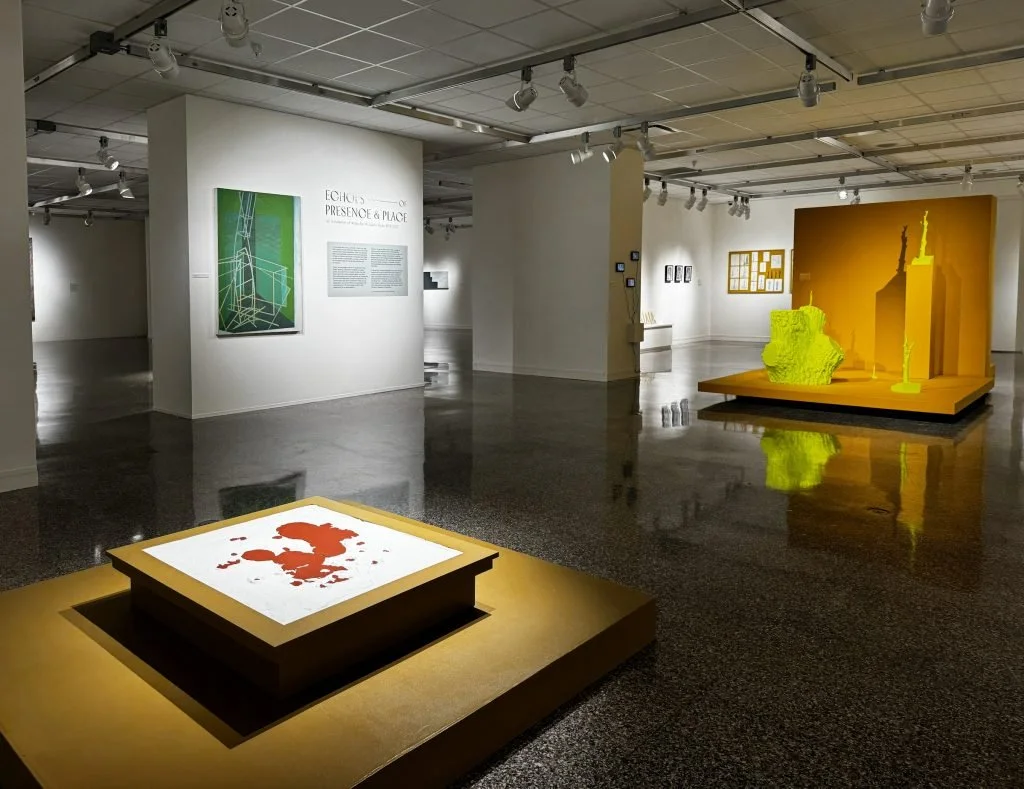
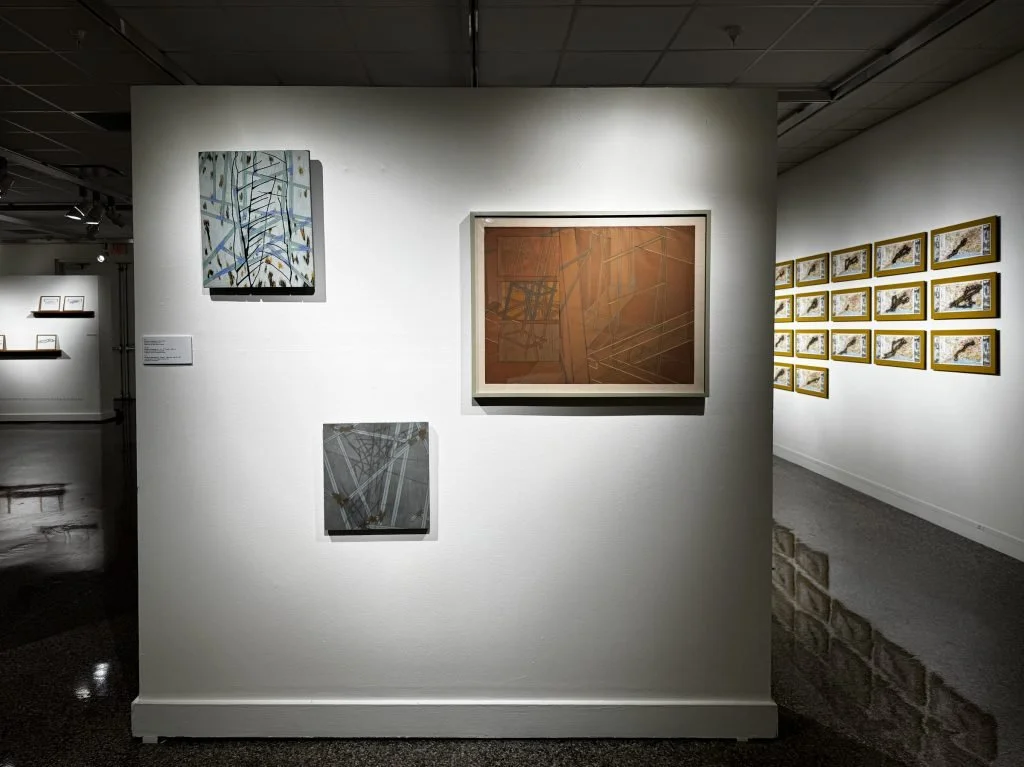
“Echoes of Presence and Place,” Rockford Art Museum’s retrospective of the artist’s nearly half-century output, serves as a corrective to that relative obscurity. Organized by Carrie Johnson, RAM’s executive director and chief curator, the exhibition presents a range of Ryan’s methodical investigations of the overlooked details of our environments from which he has built his “quiet archive of presence.”
The RAM retrospective is structured around ten series, three of which are ongoing. The early series that have an end date, such as “Catalpa Tree Branch” (1983-1986) and “Adams Mulberry Tree” (1985-1987), continue to inform more recent series like “Wise One: Amputated Oak of Woodstock” (2022-ongoing) through their subject matter and systematic mode of inquiry.
Ryan’s decision to eschew an end date for many of his series offers the first hint that his practice is an extended exercise in both pushing back against and coming to terms with mortality. Take, for example, “Wise One,” which is centered on the remains of an oak tree that once grew on the artist’s family property. Ryan first drew the tree from various viewpoints. Next, he created gesture drawings by dancing and standing still, striving to “inhabit” the form of the tree. These drawings were converted to 3D objects using virtual reality software. Ryan also invited other artists to take around 950 drone photos of the tree, which he turned into 3D-printed models at different scales.
On one level, such intense and prolonged focus is a way to get to know an object intimately. On another, the compulsion to grasp something in its totality comes from an instinctive rejection of impermanence (despite knowing rejection is futile). To fully embrace the essence of something is to attempt to pause the inexorable march toward entropy. It’s the opposite of letting go and letting time run its course.
The specter of death also drives humankind’s urge to leave proof of our earthly existence in the form of organized and repeated marks, an activity we’ve practiced since someone scratched a cross-hatch pattern onto the walls of a South African cave 73,000 years ago. All of Ryan’s artworks are built from accretions of marks in a range of media—graphite, ink, grooved and carved wood, sand and layers of extruded plastic—while the subject matter that engenders the mark-making is always in a state of flux: dying trees, the shifting water line between a river and its bank, the artist’s own body, his movements through a city.
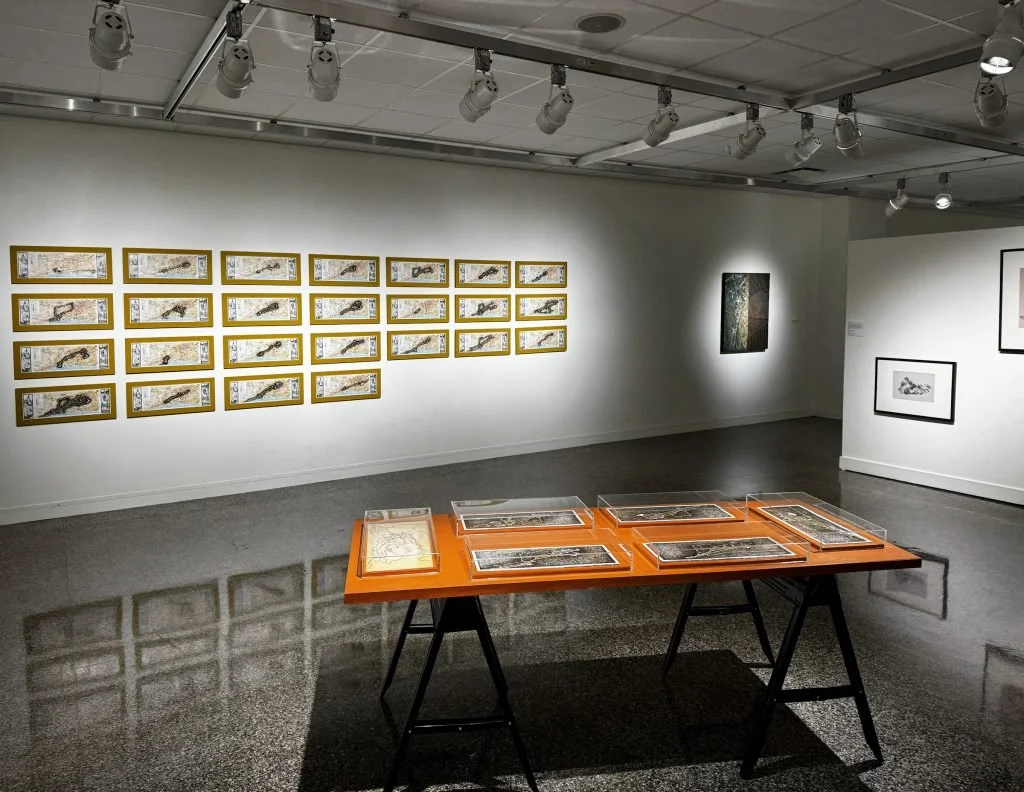
One series in the show that initially puzzled me is “Chicago Roadstains” (2005-ongoing), in which Ryan traces stains he finds on city streets and turns them into large-scale wood reliefs that are hand-cut and smoothly coated with thin layers of latex paint. On first read, the series seemed to be a joke about art’s fetishization of mark-making, unlike any of Ryan’s other introspective works.
But as I sat among the framed reliefs, the contours of the stains and their shadows gradually morphed into rhizomes, land masses and contrails from rocket thrusters, revealing that even random spills of oil, soda and other liquids of sketchy provenance that are under our shoes can be quite beautiful, if we take the time to notice.
Like mark-making, having the capacity to notice—to aesthetically frame the overlooked and insignificant and even the filthy—is a distinctly human trait. Even more so than Ryan’s other series, “Chicago Roadstains” shows us that by harnessing that capacity we can achieve détente between resistance and submission and “sit with” our mortality, if even for a moment. It’s a much more nuanced prescription than Dylan Thomas’ oft-repeated exhortation that we rage against the dying of light but delivered with just as much conviction.
(Published in Newcity, January 12, 2026)